Introduction: When Stability Is No Longer Assumed
For much of the post–Cold War era, global stability rested on a set of widely shared assumptions. Major powers would avoid direct confrontation. Economic interdependence would discourage large-scale conflict. Deterrence, while imperfect, would remain reliable enough to prevent systemic breakdown.
These assumptions are now under strain.
Rising great power competition, regional flashpoints, and internal political pressures within major states are eroding the predictability that once underpinned global order. The world is not descending into open war—but it is no longer operating under the same margins of safety.
This shift marks the beginning of a new phase: not the collapse of deterrence, but the end of deterrence as a guarantee of restraint.
Deterrence Still Exists—Certainty Does Not
Deterrence has not disappeared from international politics. Military capabilities remain formidable, nuclear thresholds still matter, and the costs of escalation are well understood by policymakers.
What has changed is confidence.
Strategic decisions are increasingly made under conditions of incomplete information, compressed timelines, and heightened domestic pressure. As a result, the space between deterrence and escalation has narrowed. Miscalculation—not intent—has become the primary risk factor.
In this environment, stability is no longer a structural condition. It is a variable that must be actively managed.
From Systemic Shifts to State Behavior
As global predictability declines, state behavior is adapting in observable ways.
Major powers are no longer planning solely for deterrence success; they are preparing for deterrence failure. Military doctrines increasingly emphasize resilience, rapid decision-making, and escalation control rather than outright dominance.
Alliances, once treated as static guarantees, are being reassessed. Partners hedge, diversify, and quietly explore contingency planning beyond formal commitments.
For middle powers, the challenge is even more acute. Strategic ambiguity offers flexibility, but it no longer provides insulation. Avoiding alignment does not eliminate exposure; it redistributes risk.
These patterns are not isolated responses. They are symptoms of a broader systemic adjustment to a world where no single power can reliably enforce stability—and no shared framework exists to replace it.
The Rising Cost of Uncertainty
The most significant impact of this transformation is not immediate conflict, but persistent uncertainty.
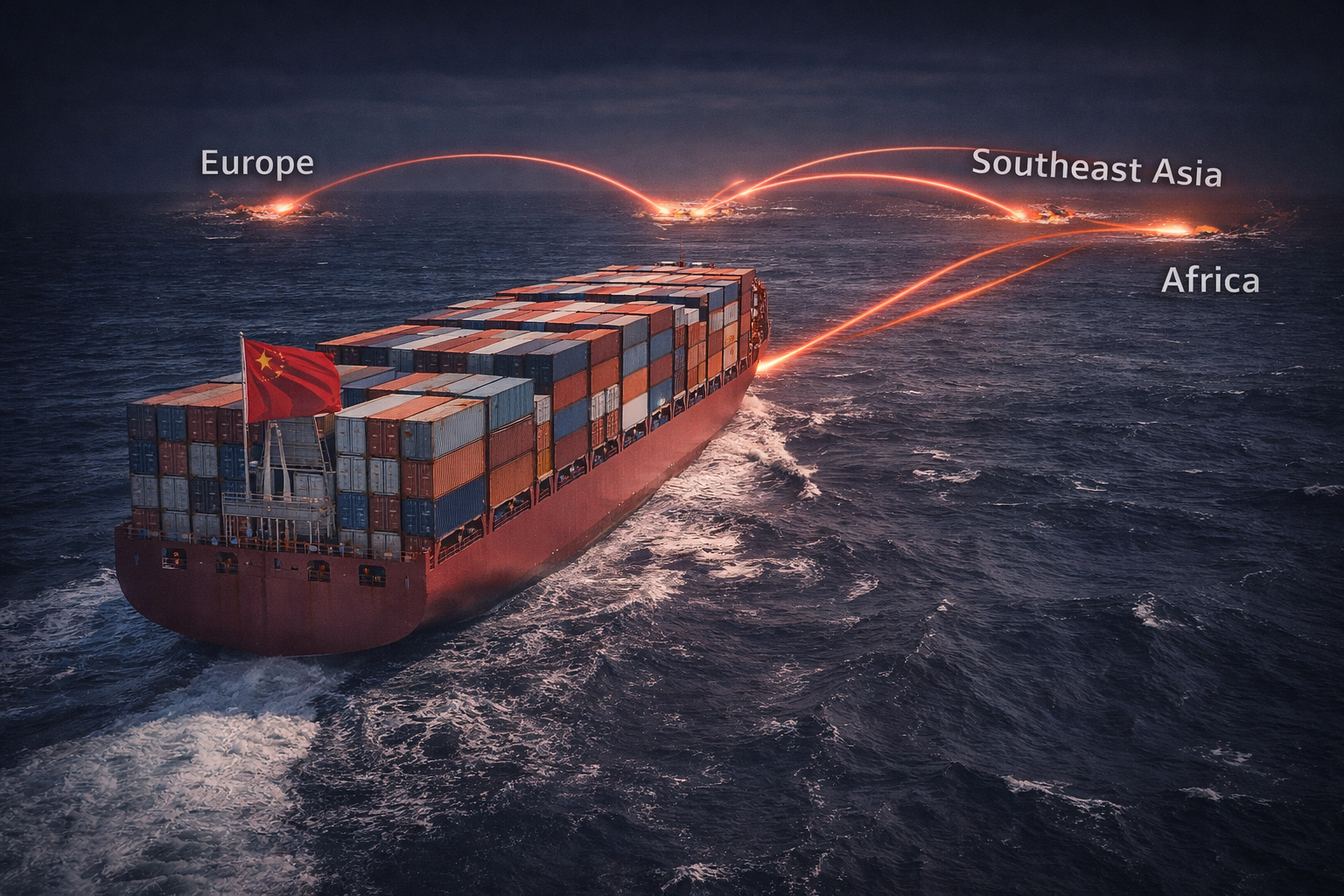
Economic systems are increasingly shaped by geopolitical risk rather than efficiency. Supply chains are redesigned for resilience, not optimization. Defense planning absorbs a larger share of national attention and resources, even in regions far from active flashpoints.
For smaller and mid-sized states, the cost is structural. Long-term planning becomes harder. Strategic mistakes carry higher penalties. The margin for diplomatic error narrows.
In this context, stability itself becomes a scarce resource—one that must be actively preserved rather than passively assumed.

Flashpoints as Systemic Tests
Within this broader environment, regional flashpoints take on heightened significance. They are no longer local disputes alone; they function as stress tests for the international system.
How major powers manage crises—whether through restraint, signaling, or escalation—sends signals far beyond the immediate region. Each response recalibrates expectations, shapes future behavior, and alters perceptions of credibility.
The outcome of any single crisis matters less than the precedent it establishes.
Conclusion: Managing Risk in a Fragmented Order
The contemporary international system is not defined by inevitable war or enduring peace. It is defined by risk management.
Deterrence remains part of the equation, but it no longer guarantees stability. Instead, stability depends on continuous calibration—of power, perception, and restraint—under conditions of growing uncertainty.
Understanding today’s geopolitical landscape therefore requires moving beyond questions of who will act, and toward questions of how risk accumulates, how misjudgments occur, and how systems adapt when old assumptions no longer hold.
In this world, the challenge for states is not to restore a past era of predictability, but to navigate a future where stability must be actively constructed—one decision at a time.