Introduction
The reported detention of a senior general within the People’s Liberation Army (PLA), widely regarded as politically close to Xi Jinping, has drawn significant international attention. While official explanations emphasize discipline and internal investigations, the broader significance of this development lies in what it reveals about power consolidation, civil–military relations, and strategic timing within China’s political system.
This analysis examines what the incident suggests about internal dynamics within the PLA and whether it meaningfully alters Beijing’s strategic posture toward Taiwan.
Beyond Discipline: Power and Control Within the PLA
Historically, leadership transitions and internal purges within the PLA have often coincided with periods of institutional restructuring rather than immediate external escalation. The detention of a high-ranking officer—particularly one perceived as part of the leadership’s inner circle—signals that political loyalty and command discipline remain paramount, even among trusted elites.
Rather than indicating instability, such actions more often reflect an effort to reinforce centralized control. In China’s political system, the military is not an autonomous institution; it is an extension of party authority. Ensuring absolute alignment between political leadership and military command is therefore a continuous process, not a one-time achievement.
From this perspective, the incident appears less about personal rivalry and more about reaffirming hierarchy and accountability within the PLA.
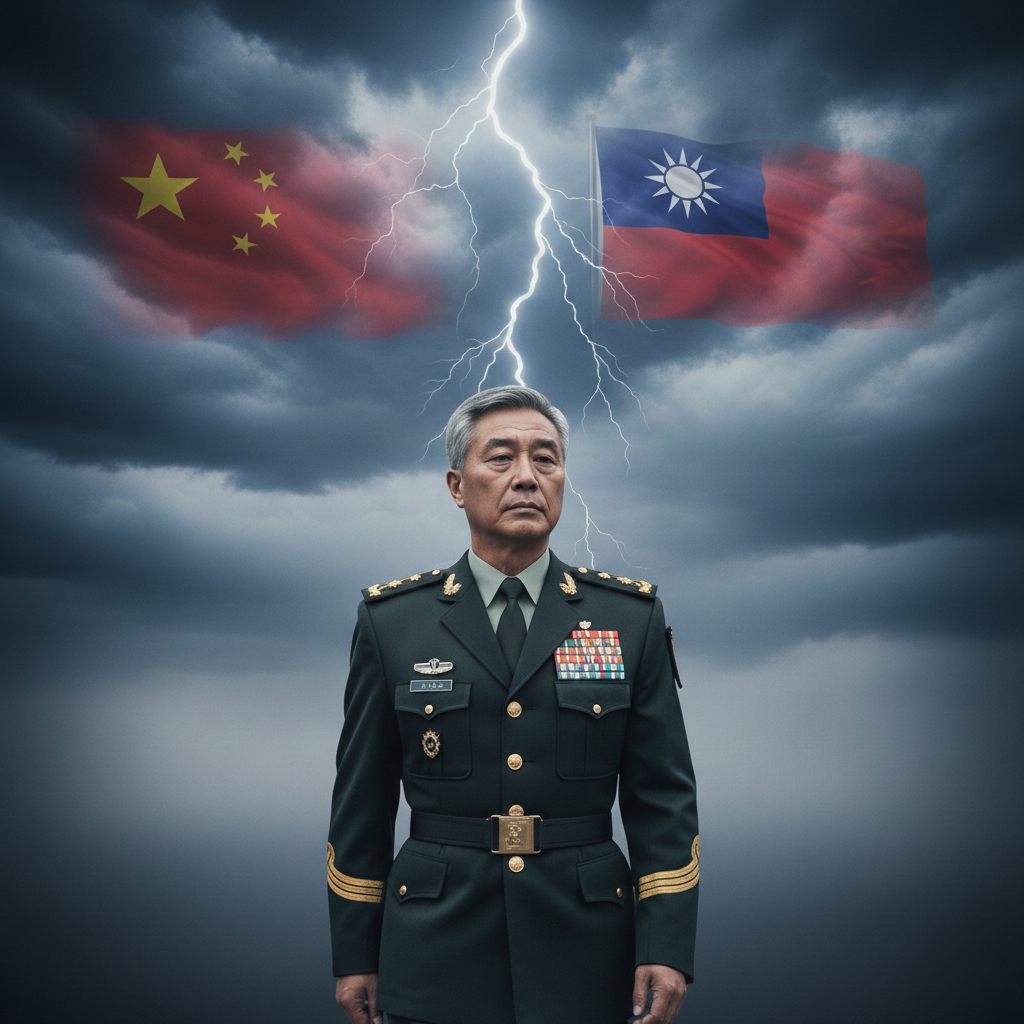
Internal Consolidation Before External Risk
Major military operations—especially those involving Taiwan—would require an extraordinary level of confidence in internal cohesion, command reliability, and crisis management capacity. Any uncertainty within senior military ranks introduces risk that leadership is unlikely to tolerate prior to undertaking high-stakes external action.
The timing of this detention suggests that Beijing is prioritizing internal consolidation over immediate external confrontation. Rather than signaling imminent escalation, the move indicates a preference for stabilizing internal command structures before revisiting large-scale strategic decisions.
In short, internal order precedes external ambition.
Does This Increase or Decrease Taiwan Risk?
In the short term, this development does not increase the likelihood of military action against Taiwan. On the contrary, it suggests a period of reassessment and internal discipline rather than acceleration.
However, in the long term, the implications are more nuanced. A PLA that is more tightly controlled, politically aligned, and institutionally disciplined could, in theory, possess greater operational coherence. This does not make conflict inevitable, but it could enhance Beijing’s confidence in deterrence and coercive signaling over time.
The key point is that internal consolidation is a prerequisite for credible military pressure—but it is not a trigger by itself.
Strategic Signaling and International Interpretation
Externally, such incidents often invite speculation about factional conflict or leadership insecurity. Yet China’s recent political history suggests a different pattern: centralized authority reinforced through selective discipline rather than broad instability.
For external observers, misinterpreting internal consolidation as weakness risks misunderstanding Beijing’s strategic calculus. The message conveyed is not urgency, but control; not haste, but preparation.
Conclusion
The detention of a senior PLA general underscores Beijing’s continued emphasis on internal discipline and political reliability within the military. Far from signaling imminent action on Taiwan, the episode reflects a leadership intent on minimizing internal uncertainty before confronting external risk.
For Taiwan and regional actors, the takeaway is not an immediate shift in threat perception, but a reminder that long-term strategic trajectories are shaped as much by internal governance as by external signaling. Understanding China’s approach requires attention not only to what happens at its borders, but to how authority is managed within its institutions.