Power That Still Dominates — But Delivers Less
Why the United States Is Carrying the Heaviest Burden in Today’s World
In today’s international system, no country is expected to be everywhere more than the United States.
From the Middle East to Eastern Europe to the Indo-Pacific, American power is assumed to be part of the equation—sometimes as a deterrent, sometimes as an enforcer, often as the last guarantor of order.
The critical question is not whether the United States wants this role.
It is whether the United States can afford not to play it.
This dilemma is not the product of any single president, ideology, or moment.
It is the result of lessons learned—often painfully—over more than six decades, lessons that point to a deeper truth:
American power remains immense, but its ability to translate that power into stable political outcomes has steadily diminished.
Vietnam: When Military Victory Was Not Enough
The Vietnam War marked the first major rupture in America’s understanding of power.
The United States dominated the battlefield, possessed overwhelming technological superiority, and won most conventional engagements.
Yet it lost the war.
The failure was not tactical but political.
American force could seize territory, but it could not compel legitimacy.
The opposing side did not need to defeat the U.S. militarily; it merely needed to endure, to deny acceptance of a new order imposed from outside.
Vietnam revealed a foundational limitation:
controlling land is not the same as controlling consent.
That lesson would echo for decades.
Iraq: The Ease of Destruction, the Difficulty of Construction
Decades later, Iraq appeared to offer a solution to the Vietnam problem.
The lesson seemed simple: do not fight slowly—strike decisively.
The U.S. military dismantled Saddam Hussein’s regime with remarkable speed.
But the collapse of the state created a vacuum no amount of military superiority could fill.
The Iraqi case exposed another asymmetry of power:
the capacity to destroy institutions far exceeds the capacity to build legitimate ones.
Removing a government is easy.
Creating a political order that society accepts is not.
Afghanistan: Time Does Not Guarantee Stability
Afghanistan was meant to correct both Vietnam and Iraq.
Instead of a quick exit, the United States committed to long-term state-building.
Twenty years.
Trillions of dollars.
A trained military, elections, ministries, and international support.
Yet when U.S. forces withdrew, the system collapsed with stunning speed.
Afghanistan delivered the harshest lesson of all:
time, money, and technology cannot substitute for internal political legitimacy.
If a state cannot stand on its own, external power can only prop it up temporarily.
Venezuela: Power Without Invasion — And Still No Resolution
Then came a different kind of lesson.
In Venezuela, the United States did not invade.
It applied economic sanctions, diplomatic pressure, and political isolation.
The Venezuelan economy collapsed.
The state weakened.
Social divisions deepened.
Yet the regime endured.
Venezuela demonstrated a new limitation of power in the modern era:
even when the United States can shape the environment, it cannot always dictate the outcome.
Influence without occupation still does not guarantee control.
When the Lessons Converge
Vietnam taught that territory does not equal legitimacy.
Iraq showed that dismantling a state is easier than rebuilding one.
Afghanistan proved that endurance alone does not create sustainability.
Venezuela revealed that even non-military pressure can fail to resolve political deadlock.
Together, these cases form a single pattern:
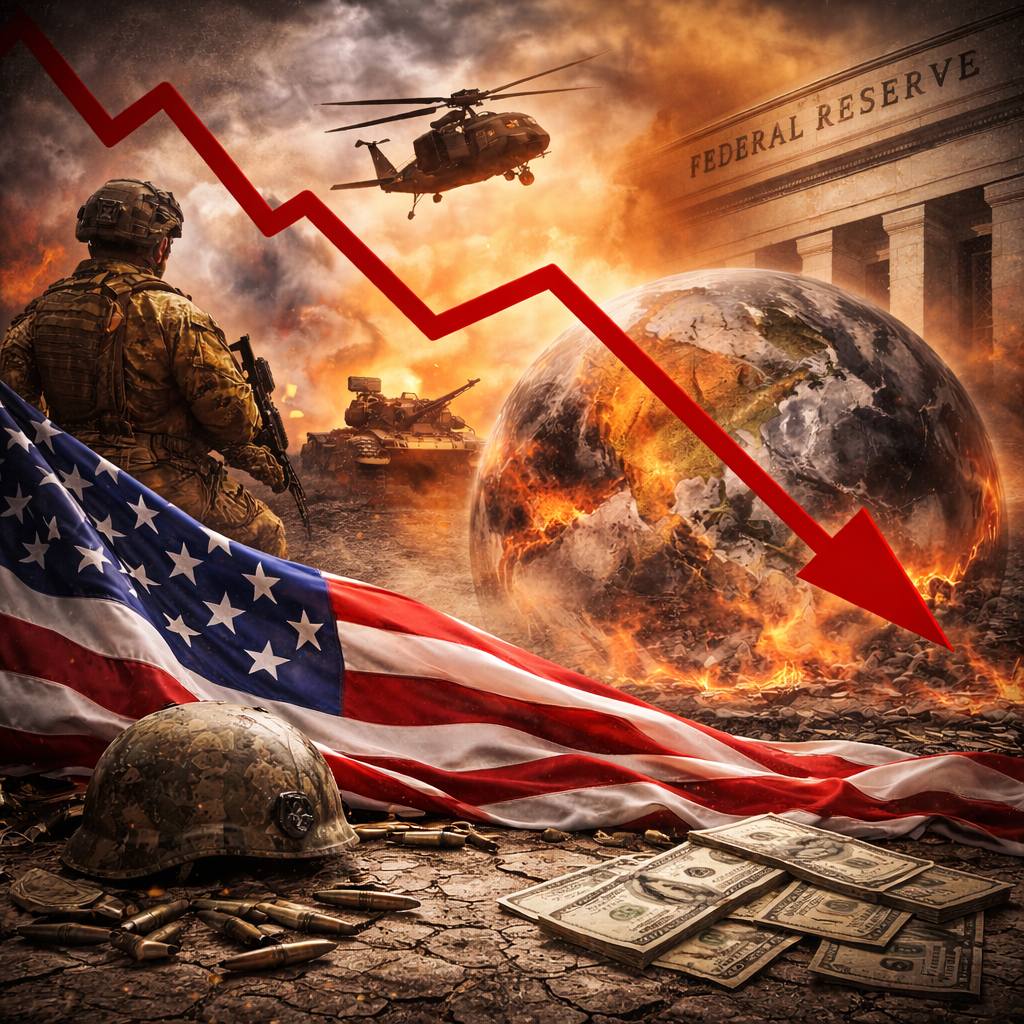
American power remains dominant, but its returns are diminishing.
This is why large-scale war with Iran is widely understood in Washington as a losing proposition—not militarily, but strategically.
The United States knows how such wars end: costly, inconclusive, and destabilizing.
And yet, the United States cannot simply disengage.
The Burden of Unipolar Leadership
As the world’s sole remaining superpower, the United States faces what strategists call the hegemon’s dilemma.
If it acts forcefully, it exhausts resources, credibility, and domestic consensus.
If it refrains from acting, allies doubt its reliability and adversaries test its limits.
In a unipolar system, inaction is itself a signal—and often a dangerous one.
This is why America appears perpetually “overextended.”
Not because it seeks conflict, but because the global order it helped build depends on its presence.
Even leaders who instinctively resist war—including businessmen like Donald Trump—find themselves constrained by this structure.
The problem is not personal ambition.
It is systemic obligation.
Conclusion
The central challenge facing the United States today is not a sudden decline in power.
It is the growing gap between power and outcome.
The world is not rejecting America because it is weak.
It is resisting solutions that rely on tools designed for a different era.
The United States is not trapped in endless war.
It is trapped in the responsibilities of leadership—responsibilities it cannot easily abandon, and cannot fully fulfill as it once did.
America’s burden is not the loss of power,
but the reality that power alone no longer delivers control.