The debate surrounding “America First” is often framed as a question of leadership style or political temperament. This framing misses the deeper reality. What is unfolding is not a rhetorical deviation, but a structural reassessment of how the United States understands alliances in an era of constrained resources and intensified great-power competition.
At its core, this shift reflects a simple but consequential insight:U.S. grand strategy, alliance politics, burden sharing, global leadership, strategic recalibrationU.S. grand strategy, alliance politics, burden sharing, global leadership, strategic recalibration
the United States no longer sees unconditional alliance maintenance as a strategic necessity.
The End of Automatic Leadership
For much of the postwar period, U.S. alliance policy rested on an implicit assumption: American leadership was indispensable, and therefore worth the cost. The United States absorbed disproportionate financial, military, and political burdens in exchange for system-wide stability and long-term influence.
That assumption is now under strain.
Rising domestic polarization, fatigue from prolonged military commitments, and the strategic demands of competition with China have altered Washington’s internal calculus. Leadership is no longer viewed as a default obligation, but as a variable to be justified.
This does not signal isolationism. It signals selectivity.
Alliances Reframed as Conditional Instruments
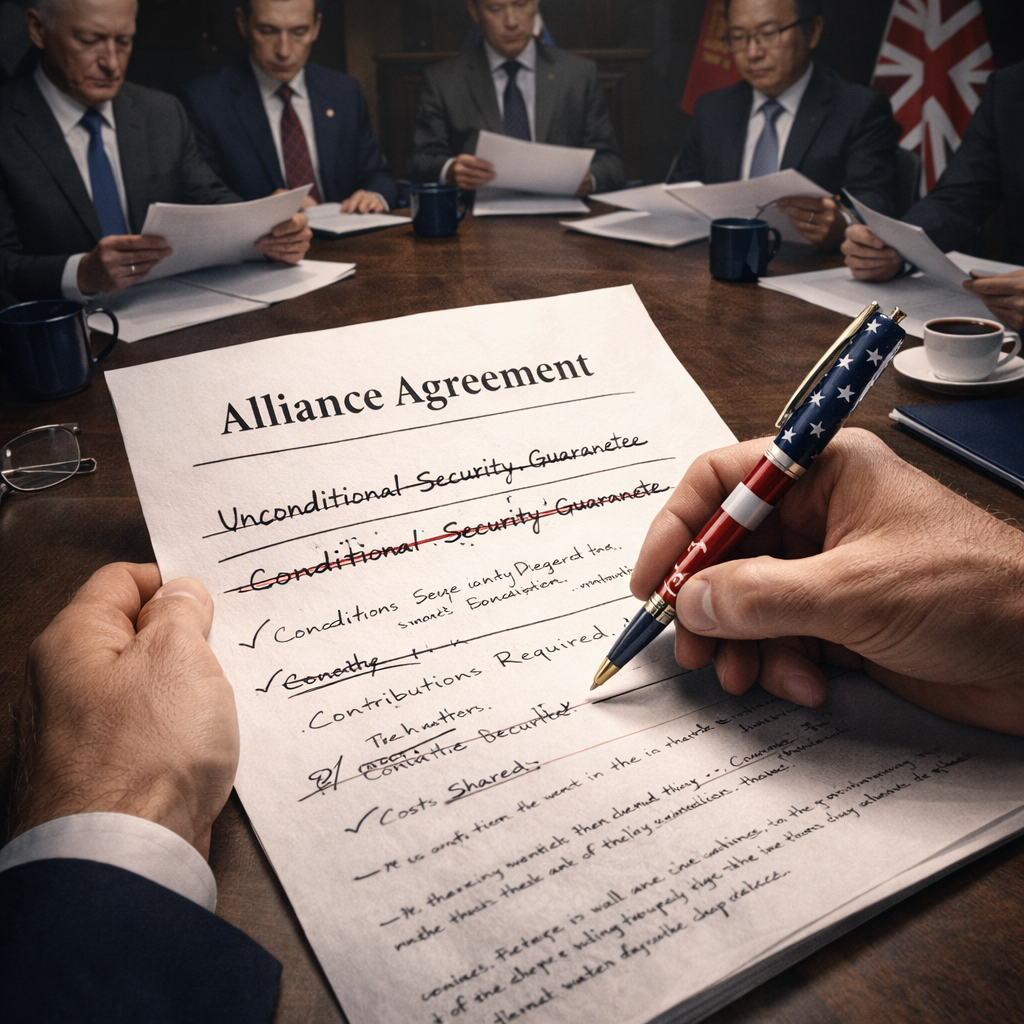
Under the emerging logic, alliances are increasingly evaluated through cost-benefit lenses rather than historical sentiment or ideological alignment. Security guarantees are no longer treated as permanent fixtures, but as instruments contingent on reciprocal contribution.
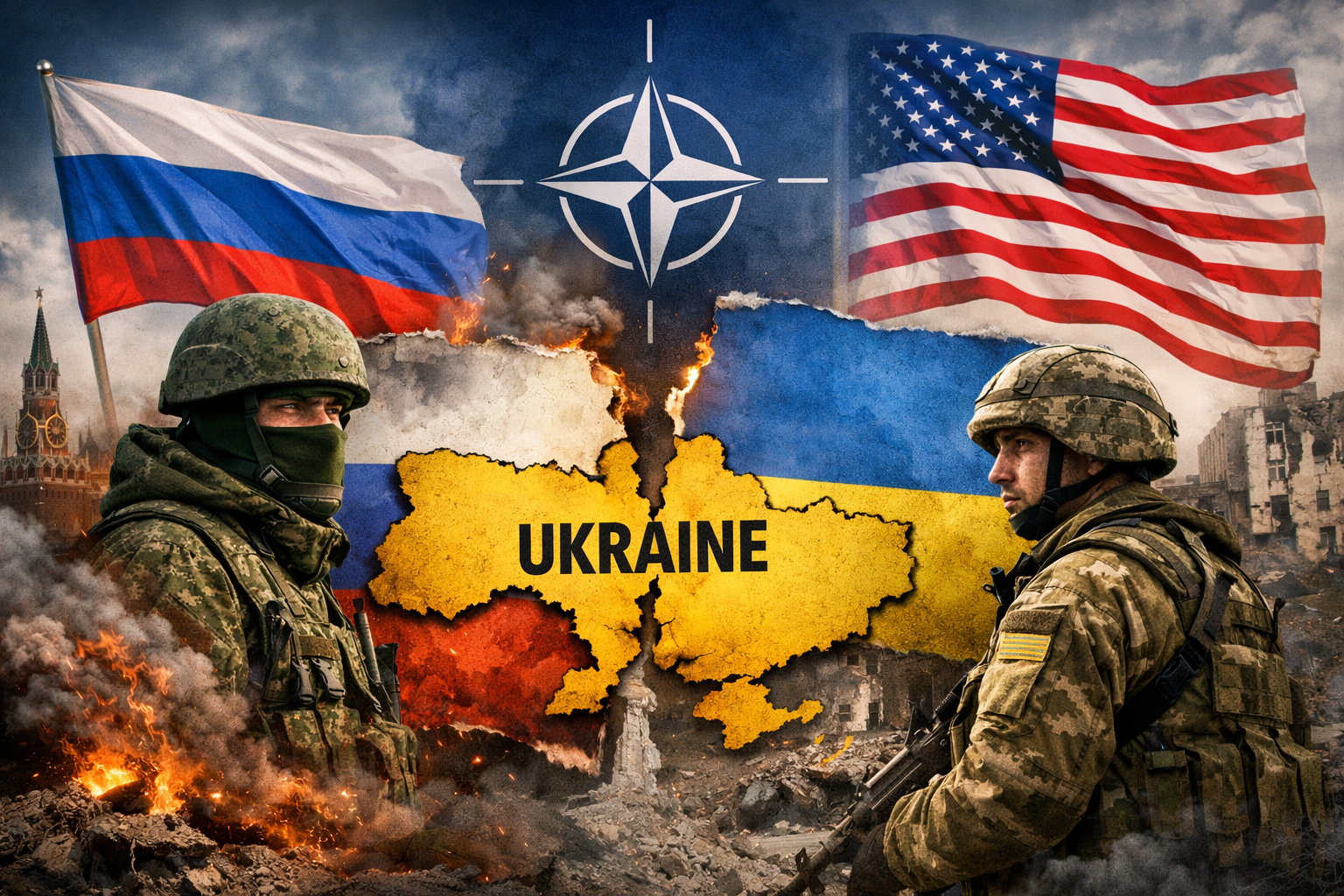
This is particularly evident in how the United States now discusses NATO. The core concern is not alliance relevance, but asymmetry. Washington’s question is no longer whether Europe matters strategically, but why American taxpayers should subsidize European underinvestment indefinitely.
From this perspective, pressure is not abandonment—it is leverage.
Why NATO Became the Test Case
NATO occupies a unique position in U.S. strategic thinking. It is simultaneously the most successful alliance in history and the most illustrative example of perceived imbalance. Its endurance has become, paradoxically, the source of American frustration.
The expectation that the U.S. will ultimately “fill the gap” has created what Washington increasingly sees as moral hazard. By challenging that assumption, U.S. policymakers aim to force structural adjustment rather than cosmetic compliance.
The risk, however, lies in how such pressure is interpreted by allies who built their security planning around U.S. predictability.
The Transactional Turn Is Structural, Not Personal
While often associated with individual leaders, the transactional turn in U.S. alliance policy reflects broader domestic currents. Skepticism toward open-ended commitments now spans political parties. Fiscal restraint, strategic prioritization, and burden rebalancing are no longer fringe arguments.
What has changed is not the desire for alliances, but tolerance for asymmetry.
The United States is signaling that participation in its security umbrella now requires demonstrable alignment not only in values, but in costs.
The Strategic Trade-Off Washington Is Making
This recalibration introduces a trade-off that is often understated. Pressuring allies may yield higher defense spending and reduced U.S. burdens. But it also alters alliance psychology. When guarantees appear conditional, partners hedge. They invest in autonomy, diversify partnerships, and prepare for volatility.
From Washington’s perspective, this may be an acceptable price. From an alliance-system perspective, it reshapes cohesion.
The United States appears willing to accept looser alliances if that reduces long-term dependency.
Insight: Power Without Automatic Loyalty
The most important insight is this:
America is not retreating from global leadership—it is redefining what leadership is worth paying for.
In this framework, influence must be earned continuously, not preserved through legacy commitments. Allies are expected to prove their value as partners, not assume it.
Whether this strengthens or weakens U.S. strategic position will depend on one factor above all others:
can the United States recalibrate alliance expectations without normalizing uncertainty?
In a competitive multipolar world, power may endure—but loyalty, once questioned, rarely returns in its original form.