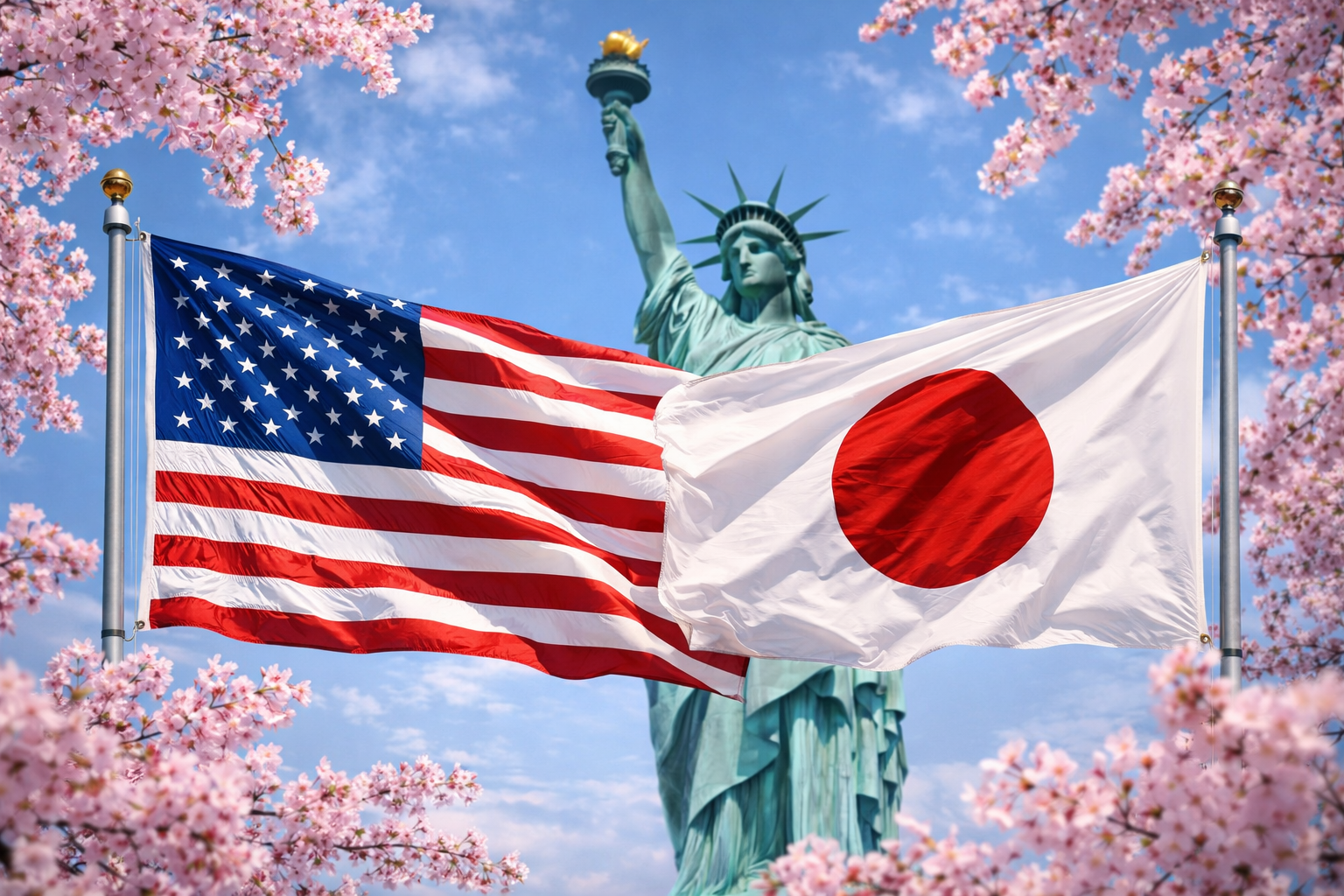
And It Will Not Be Gentle.
The post-Cold War world did not collapse in a single dramatic moment.
It eroded quietly — through wars, trade restrictions, fractured alliances, and rising distrust.
Japan’s recent election is one more sign that the era of comfortable globalization is over.
This was not merely a domestic vote about wages or aging demographics. It was a decision made in the shadow of a changing global order — one in which power is no longer concentrated, rivalry is no longer theoretical, and neutrality is increasingly expensive.
Multipolarity is no longer an academic concept. It is the operating system of the 2020s.
Multipolarity Is Not Balance — It Is Friction
The word “multipolar” sounds stable. It suggests equilibrium, shared influence, distributed authority.
History suggests otherwise.
Multipolar systems are not gentle balancing acts. They are systems of constant adjustment — where every move by one power forces a recalculation by another.
In this environment, Japan’s trajectory matters enormously.
For decades, Japan relied on pacifism and economic strength. It prospered in a U.S.-anchored order that kept regional tensions manageable.
That order is fading.
Now Japan must decide: remain strategically restrained — or become a proactive security actor in a region where power is shifting fast.
The election result suggests the latter path remains on the table.
The Indo-Pacific Is the Core Arena
If Taiwan is the flashpoint, Japan is the fulcrum.
American bases on Japanese soil are central to any contingency. Japanese naval forces guard critical sea lanes. Japanese technology companies sit at the center of semiconductor supply chains.
In a multipolar world, geography becomes destiny again.
And Japan’s geography is not neutral.
A more assertive Japan strengthens deterrence against China.
A hesitant Japan weakens it.
But either choice carries risk.
Strength clarifies lines — and sharpens rivalry.
Hesitation invites ambiguity — and miscalculation.
There is no cost-free path.
The Illusion of Isolated Conflicts
Some observers still treat global crises as separate theaters:
Ukraine weakens Russia.
Indo-Pacific strategy contains China.
Middle Eastern alignments pressure Iran.
But in a multipolar system, these arenas are not isolated. They are interconnected.
When Washington strengthens alliances in Asia, Beijing recalculates.
When Russia is pressured in Europe, it deepens ties elsewhere.
When regional blocs solidify, economic systems fragment.
Japan’s election sits inside this web.
It signals whether Asia’s democratic anchor is willing to absorb greater strategic responsibility — or retreat into domestic caution while power politics accelerates around it.

The Real Question: Is Multipolarity More Stable?
There is a comforting narrative that a world with multiple centers of power prevents domination and therefore promotes balance.
Yet historically, multipolar systems have often produced arms races, alliance shifts, and misjudgments.
What stabilizes such systems is not the number of powers — but the clarity of deterrence.
Japan’s decision to expand defense capabilities and deepen security ties suggests one conclusion:
The region is preparing for sustained competition, not temporary tension.
That preparation may prevent war.
But it also normalizes rivalry.
A Vote That Echoes Beyond Japan
Japan’s election is not a revolution. It is something subtler — and possibly more significant.
It reflects a society slowly accepting that security can no longer be outsourced entirely. That economic interdependence is not sufficient insurance. That the rules-based order requires active defense.
In short, it reflects a world where power politics has returned.
Multipolarity is not abstract. It is structural.
And structures shape behavior.
The Hard Truth
The multipolar world will not resemble the post-Cold War era. It will be more transactional, more strategic, more cautious — and occasionally more volatile.
Japan’s election is one more signal that major states understand this shift.
The question is whether the rest of the world does.
Because multipolar systems do not fail suddenly.
They strain gradually — until one miscalculation tests the balance.
Japan just chose to reinforce one side of that balance.
History will determine whether that makes the system safer — or sharper.